Bedding guide
Down Pillow Fill Power, Firmness, and Care: What to Compare
Down pillows are known for their airy softness and ability to spring back after compression. But a number on a label cannot tell the whole story. To understand how a pillow may feel, look beyond fill power to its construction, firmness, shell, your sleep habits, and the care it requires.
Down has an unusual lightness. Its soft clusters trap air, yielding under the weight of a head and then lofting again when that weight lifts. That combination has made down a familiar bedding fill for generations. Yet two down pillows can behave quite differently, even when their labels display similar numbers. One may feel cloudlike and yielding; another may hold a more substantial shape beneath the neck.
The difference lies in the whole pillow, not simply the material inside it. Fill power describes the volume occupied by a given weight of down under standardized conditions. It can offer a useful clue about loft and insulating capacity, but it does not directly measure firmness, sleeping height, or support. Those depend on several elements working together: the amount and type of fill, the pillow’s chambers and gussets, the shell fabric, and the way a sleeper settles into it.
Understanding these details makes comparison more practical. Instead of searching for a single “best” fill-power figure, consider how the pillow should sit beneath your head, whether it can be adjusted or refreshed, and what its care instructions ask of you. A well-matched pillow is not necessarily the loftiest or softest one. It is the one that helps keep your head and neck comfortable in a position you can maintain through the night.
What down is—and what fill power means
Down consists of the soft, three-dimensional clusters found beneath the outer feathers of birds such as ducks and geese. Unlike a feather, which has a central quill, a down cluster has fine filaments radiating from a small center. These filaments hold pockets of air. In a pillow, the clusters compress under pressure and can regain some of their loft when released, although their performance changes with use, moisture, and care.
Fill power is a measure of the volume a particular weight of down occupies. It is commonly expressed as a number, such as 600 or 800. In general, a higher fill-power number means the down is more voluminous for its weight. That can allow a manufacturer to create a lofty pillow with less fill by weight, or a light pillow with a generous-looking loft.
The measure is useful, but it is easy to read too much into it. Fill power is not a firmness scale. It does not tell you how much down is in the pillow, how tightly the fill is packed, what shape the pillow will take beneath your head, or whether it suits your sleeping position. A high fill-power pillow can still feel soft if it contains a modest amount of fill. A pillow with lower fill power may feel firmer if it is densely filled or built with a supportive central chamber.
Think of fill power as one piece of a construction description, rather than a verdict on comfort. It can help distinguish the character of the down, but it needs context. When a label gives the fill-power figure, look for additional information about fill weight, firmness options, dimensions, and internal design. If these details are not supplied, the number alone leaves important questions unanswered.
Firmness comes from the whole construction
“Soft,” “medium,” and “firm” are familiar words in bedding descriptions, but they do not always mean the same thing from one maker to another. They are useful starting points, not standardized measurements. A soft pillow generally yields readily and may allow the head to sink farther. A firmer pillow resists compression more strongly and tends to keep more of its shape. Neither quality is universally better; the suitable feel depends on the sleeper and the rest of the bed.
Fill quantity is one major influence. More down in a given pillow can create a fuller, more resistant feel, though the exact result depends on the clusters and the way they are arranged. A smaller quantity can make a pillow more compressible and light. But construction can change the experience: a gusset along the edge can help a pillow maintain its thickness toward the sides, while a divided or chambered design may place different fills in different zones.
Some pillows use a supportive feather or feather-and-down center with softer down on the outer sides. The central section can provide a more stable base, while the outer layers create a softer surface. Other pillows use down throughout. Reading the description closely helps explain why two pillows made with down may have distinct responses, even if their labels use similar language.
Shell fabric matters as well. A tightly woven shell helps contain fine fill and can affect how the pillow bends, rustles, and feels against the face. Thread count alone does not describe every aspect of fabric quality or performance. Consider the shell’s fiber, weave, finish, and care directions, as well as whether the product information describes it as down-proof. A removable protector or pillowcase adds another layer between the face and the shell, and can reduce how often the pillow itself needs cleaning.
Match loft and feel to the way you sleep
Loft is the pillow’s height, especially as it supports the head. Its useful height is not necessarily the height measured when the pillow is untouched on a bed. Down compresses under weight, so the pillow may settle substantially once someone lies on it. The position of the head, the width of the shoulders, and the firmness of the mattress all affect how much height feels appropriate.
For many side sleepers, the pillow needs to fill the space between the mattress and the side of the head without pushing the head sharply upward. Shoulder width and mattress give both matter: a broad shoulder or a less yielding mattress may leave a larger gap to support, while a softer mattress may allow the shoulder to sink more. A fuller pillow may suit some side sleepers, but a high-loft label does not guarantee a good fit. The pillow still needs to compress to a comfortable height.
Back sleepers often look for a height that supports the natural curve of the neck without tipping the chin strongly toward the chest or letting the head fall too far back. A medium or lower profile may work for some, but individual proportions and mattress feel make a difference. Stomach sleepers commonly prefer less height, since a thick pillow can hold the head at an angle that feels uncomfortable. A very soft pillow that compresses readily may be preferable to one that keeps the head elevated.
These are guidelines, not rules. People change positions during sleep, and a pillow that feels suitable at bedtime may behave differently after several hours. If you move between side and back sleeping, a pillow with a flexible, moldable feel may be easier to settle into than one with a fixed contour. If possible, consider a return or trial policy before buying; a short test while awake can reveal only part of how the pillow will feel over time.
Comfort is also not a diagnosis. A pillow cannot promise to resolve persistent neck pain, headaches, or other medical concerns. If discomfort is recurring or severe, a qualified health professional can help assess its causes. For everyday comparison, pay attention to whether you can rest without repeatedly folding, bunching, or stacking the pillow to find a comfortable position.
A practical comparison checklist
Product labels can be dense with specifications. Sorting them into a few questions makes the comparison clearer. Start with what the pillow is designed to feel like, then verify the construction details behind that description.
- Fill power: What volume rating is given, and is it accompanied by information about the amount of fill?
- Firmness choices: Are soft, medium, and firm versions available, and does the maker explain the distinctions?
- Construction: Is the pillow filled throughout with down, or does it use chambers, a feather center, or a gusset?
- Loft and dimensions: What are the pillow’s size and profile, and how might the fill compress under a head?
- Shell: What is the cover made from, and does the description address containment, texture, or breathability?
- Care: Can the pillow be washed, or is spot cleaning or professional cleaning recommended? How should it be dried?
- Protection: Is there a removable cover, and can you use a washable pillow protector?
- Materials and sourcing: Are the fill and shell contents described clearly, including relevant sourcing or certification details?
Certifications and sourcing statements answer questions about materials or production standards; they do not determine whether the pillow’s height and firmness will suit you. Treat these as separate considerations. A pillow can have a desirable material profile and still feel wrong for your preferred sleep position, just as a comfortable design may not meet every person’s priorities about sourcing or maintenance.
Down, feathers, and other fills: useful distinctions
Down and feathers are related but not identical. Down clusters are soft and have no central quill. Feathers have a shaft and generally provide a firmer, more structured character. A pillow that blends the two may be designed to combine softness with added support. Check the stated proportions: a product called a “down pillow” may contain a blend, and the description should clarify what makes up the fill.
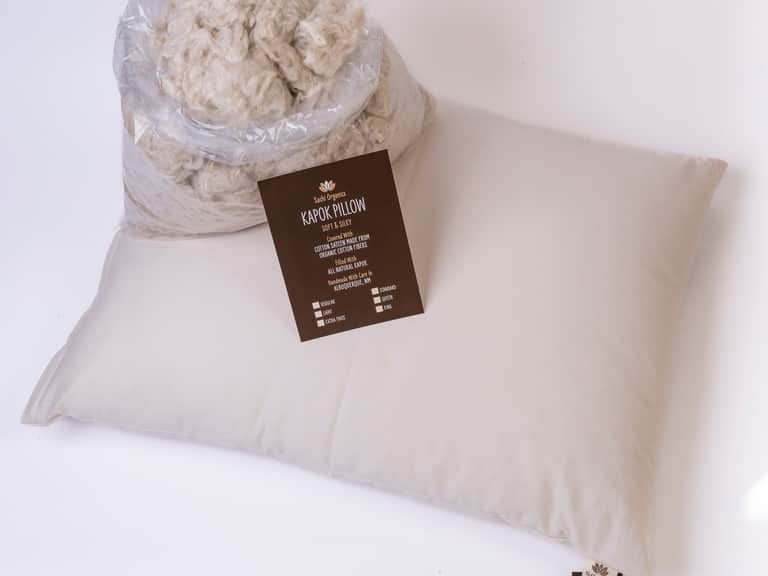
Other materials offer different responses. Memory foam tends to contour under pressure and recover more slowly than many traditional fills. Latex is often more buoyant and springy. Wool, cotton, and kapok have their own weights, textures, and care needs. These contrasts do not create a universal ranking. They are useful when a sleeper knows, for instance, that they prefer a pillow that holds its shape more steadily or one they can reshape by hand.
Down is often appreciated for being light and moldable, but that pliability can also mean the pillow shifts or compresses as the sleeper moves. People who want a consistent, fixed profile may prefer a different construction. Those who like to scrunch or fold a pillow may value the adaptability. The key is to think about how a pillow behaves in use rather than relying on a material name to stand in for a complete description.
Care begins with protection
Because a pillow sits close to the face and hair, it gradually encounters moisture, oils, and everyday dust. A washable pillowcase is the first line of protection. A separate pillow protector, preferably one that can be laundered regularly, adds another barrier and helps keep soil from reaching the fill. Use the pillow and its protector according to their individual care labels; the care method for a cover does not necessarily apply to the pillow inside it.
Regular airing can help a pillow feel fresher between washes. Give it room in a dry, well-ventilated place, away from damp conditions. Gentle fluffing can redistribute the fill and restore some loft. Avoid shaking a pillow so forcefully that seams or shell fabric are strained. If it has developed a persistent odor, visible staining, or a clumped interior, consult the maker’s care instructions rather than assuming a home wash is safe.
Washing and drying a down pillow
Down pillows are not all washable in the same way. Some can be machine washed; others may call for spot cleaning or professional care. The care label takes priority over general advice. Before washing, inspect the shell for weak seams or damage. A small opening can allow fill to escape, and a wash may make the problem worse.
When machine washing is permitted, follow the specified temperature, cycle, and detergent guidance. A gentle cycle and a mild, low-sudsing detergent are commonly recommended for washable down, but the product’s instructions are decisive. Avoid bleach and fabric softener unless the maker explicitly says otherwise. If a pillow is too large for the washer to move freely, or the machine has an agitator that may stress it, choose the method recommended by the manufacturer.
Drying deserves particular attention. Down can hold moisture deep inside even after the outer shell feels dry. Damp clusters may clump, smell musty, or fail to regain their loft. Follow the label’s drying instructions and allow enough time for the entire pillow to dry thoroughly. If a dryer is approved, use the recommended heat setting and check the pillow periodically, gently separating clumps where appropriate. Do not put it back on the bed until the center is fully dry.
Air drying may be appropriate for some pillows, but it can take a long time and should be done in a well-ventilated space. Direct heat or harsh sunlight may not suit every shell or fill. When uncertain, contact the manufacturer or use a cleaner experienced with down bedding. Improvised shortcuts can damage the shell or leave moisture trapped inside.
When to refresh or replace a pillow
A down pillow’s lifespan depends on its construction, how often it is used, the way it is protected, and whether its care instructions are followed. There is no single replacement date that fits every household. Over time, clusters can lose resilience, fill can shift, and the pillow may stop returning to a comfortable shape.
Notice how it behaves after airing and fluffing. Does it regain its loft, or does it remain thin and lumpy? Does it still support your preferred sleeping position without repeated folding? Is the shell intact, and does the pillow smell clean once it is fully dry? These practical signs are more useful than relying on appearance alone. A pillow can look lofty in the morning and still fail to provide the feel a sleeper needs.
Keep expectations modest: fill power is a material-volume measurement, not a promise of lasting comfort. A higher number cannot prevent wear, compensate for an unsuitable height, or remove the need for proper care. A pillow’s condition is shaped by its materials and daily use.
Choose the pillow as a system, not a number
Comparing down pillows is a little like reading a small landscape. Fill power marks one feature, but firmness, fill quantity, chamber design, shell fabric, loft, and care all shape the experience. Sleep position offers a useful starting point, while shoulder width, mattress feel, and personal preference refine the picture.
When you compare options, ask whether the pillow’s construction suits the way you sleep, whether its stated firmness is clear, and whether you can maintain it at home. Look for care guidance detailed enough to follow, and plan to use a clean pillowcase or protector. Then give the pillow time to reveal how it compresses and recovers in ordinary use.
The best choice is rarely identified by fill power alone. It is the one whose loft and feel let your head rest comfortably, whose construction matches your expectations, and whose care routine is realistic for your household. Read the specifications as a whole, and let the number inform your decision without allowing it to make the decision for you.
Frequently asked questions
Does higher fill power mean a firmer down pillow?
No. Fill power measures the volume occupied by a given weight of down; it does not directly measure firmness. The quantity of fill, pillow dimensions, construction, and the way the clusters compress all affect feel.
Is high fill power always better?
Not necessarily. A higher figure can indicate more volume for a given weight, but it does not guarantee a suitable loft, firmness, or level of support. Compare it alongside the pillow’s other specifications and your own preferences.
Can a down pillow be washed at home?
Some can, while others require a different method. Check the pillow’s care label before washing. If machine washing is allowed, follow its instructions closely and make sure the pillow is dried thoroughly before use.
How can I tell whether a down pillow needs replacing?
Consider whether it recovers after gentle fluffing, holds a comfortable shape, remains clean and odor-free, and still supports you as expected. Persistent flattening, clumping, damage, or an inability to get it fully clean may indicate that it is time to replace it.